I have misplaced my keys. In a moment of wild abandon, I have misappropriated the rent money. I have misattributed a smart thought to myself and mishandled important conversations. I have missed the bus, and twice, my plane. I have misaligned my loyalties and the decimal in my checkbook. I have mis-stepped and landed on my face ~ literally and figuratively.
Yet, -mis, you miscreant, Upon one event your language misconstrues:
Under the luminous moon
of the equinox, I travel this
quiet New England byway.
Behind me, a small possum sits
in a twist of brush and bramble.

She’s praising Something
– herself, fate, or God -
for running the gauntlet
of my tires; how she did it
is a question for minds
bigger than hers or mine.

Yet I’ve told her story out of turn:
First were frantic breaths
and heaving tremors
as she recalled her maze of terror:
the swirling black teeth,
the cold asphalt on her pads,
the shocking graze of metal against
her coarse coat.
.
It's a shame that possums
are solitary animals.
No one was there, watching
wide-eyed and breathless;
No one was there, applauding
the blind luck and dumb moves
that got her to the other side.

I drive on.
North of me, at the end of another road,
a dark sentinel gazes into blackness;
where horizon meets the sea,
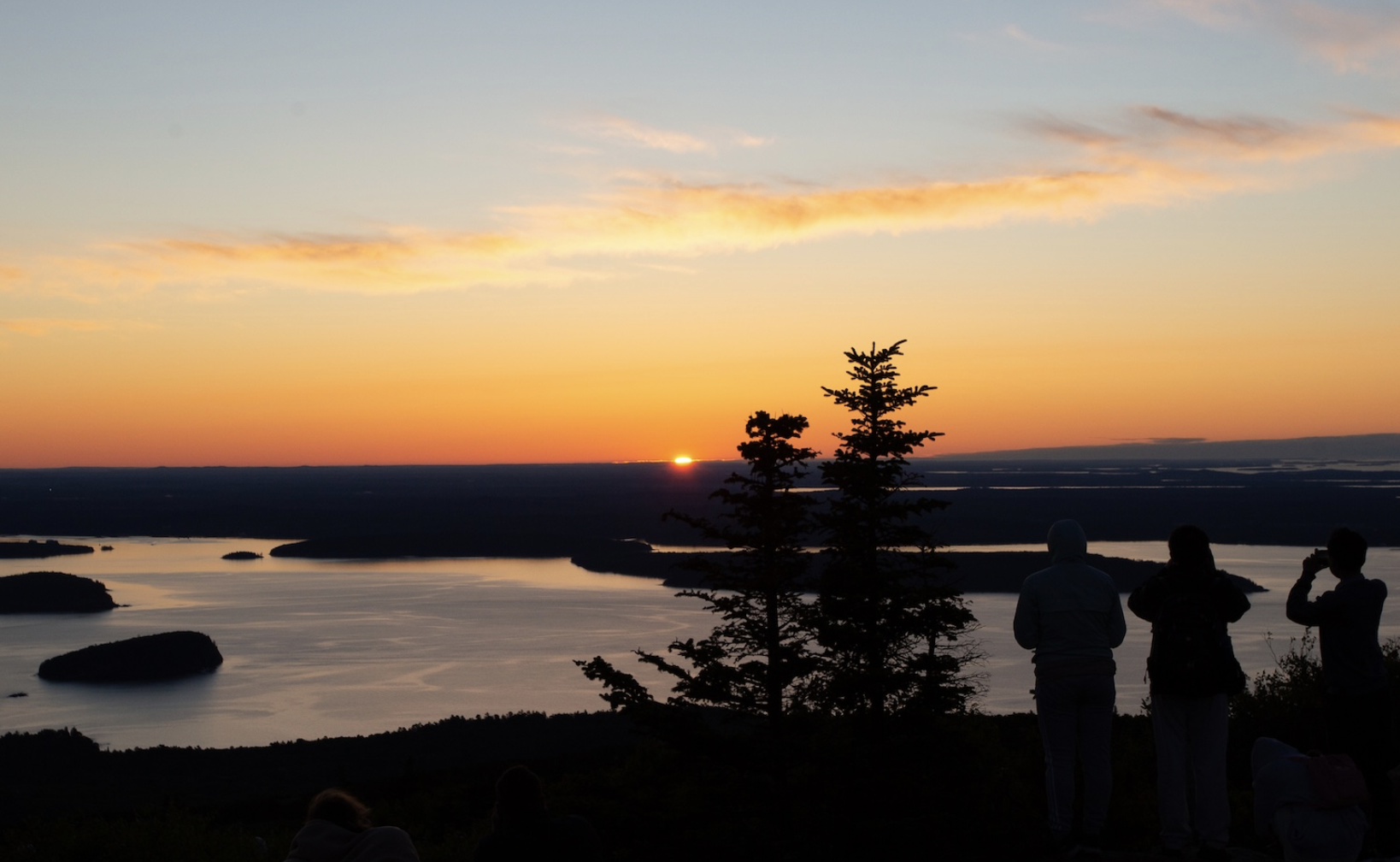
Cadillac Mountain waits for the sun.

I return.
It's pre-dawn, fourth of July;
you slumber in your sleeping bag
as I pass under festive banners
on my way to the trail.

I stumble up the mountain
to wait for the sunrise, my soul
bounding and rebounding
against your world’s low atmosphere.

I arrive in the final opaque moments;
others are here too:
in pairs in groups in close proximity.
We wait, and I wrap my arms
around myself.

There was nothing I could do
to stop that certain light;
the urge to bolt seized like a spasm,
and I tumbled across, blind and careless,
careening into coldness,
into tangle, into truth.

No one saw me when I crossed over;
the clapping I heard was not for me,
but for the first rind of light that sent
shimmers across the waters.

I sat, far into the new day,
breathing the air
and blinking at the light.

That night,
while everyone watched fireworks,
I embraced Independence Day.
As the Israelites traveled through the desert wilderness, the presence of God was manifest in a cloud by day and a pillar of fire by night. Exodus 13:22
In the summer of 1982 God sat at a card table, poodles at her ankles, cocked cigarette in hand, setting her nine cards in vast array.
The summer of '82 was slow and hot and humid, and we traveled through the days card by card, pacing ourselves by trumpeted proclamations Let’s Make a Deal! Wheeeeeel ooofff Fortune! and the whispers of Luke and Laura.
When the news ended, when the last card played, when the air was thick and stale, and we were tired of each other, I trudged away, smelling of smoke, and entered my quiet house. If anyone was there, they knew I had been with God.
Every morning, I’d return, crossing the wasteland, my house to God’s, to sit before the altar of three channels and eat toast to the happy banter of others Good Morning, America.
The incense of tobacco, bright and fragrant, rose into the crisp morning air, air cleansed by the light of the moon.
Sometimes God thundered about daughters-in-law. Sometimes God quaked about the silent phone line, the boys who seldom called. Sometimes God wept for the sins of the family, and sometimes God spoke in a still small voice, It’s going to be ok, honey Oh baby, I’m so very sorry
An ember by night, the Cloud of Presence by day, In the wandering wilderness of that season, God Was.
Letting go is like
Letting go of honey,
or letting go of dirt
under your fingernails after
an afternoon in the garden

Letting go is like
dropping a hot-handled skillet,
the imprint bubbled into your palm.

Or it is like lingering.
It is losing the scent
from a lover’s pillow.

It is the slow melt.

It is marking each labored breath
while feeling the planet’s rotation
under your feet.

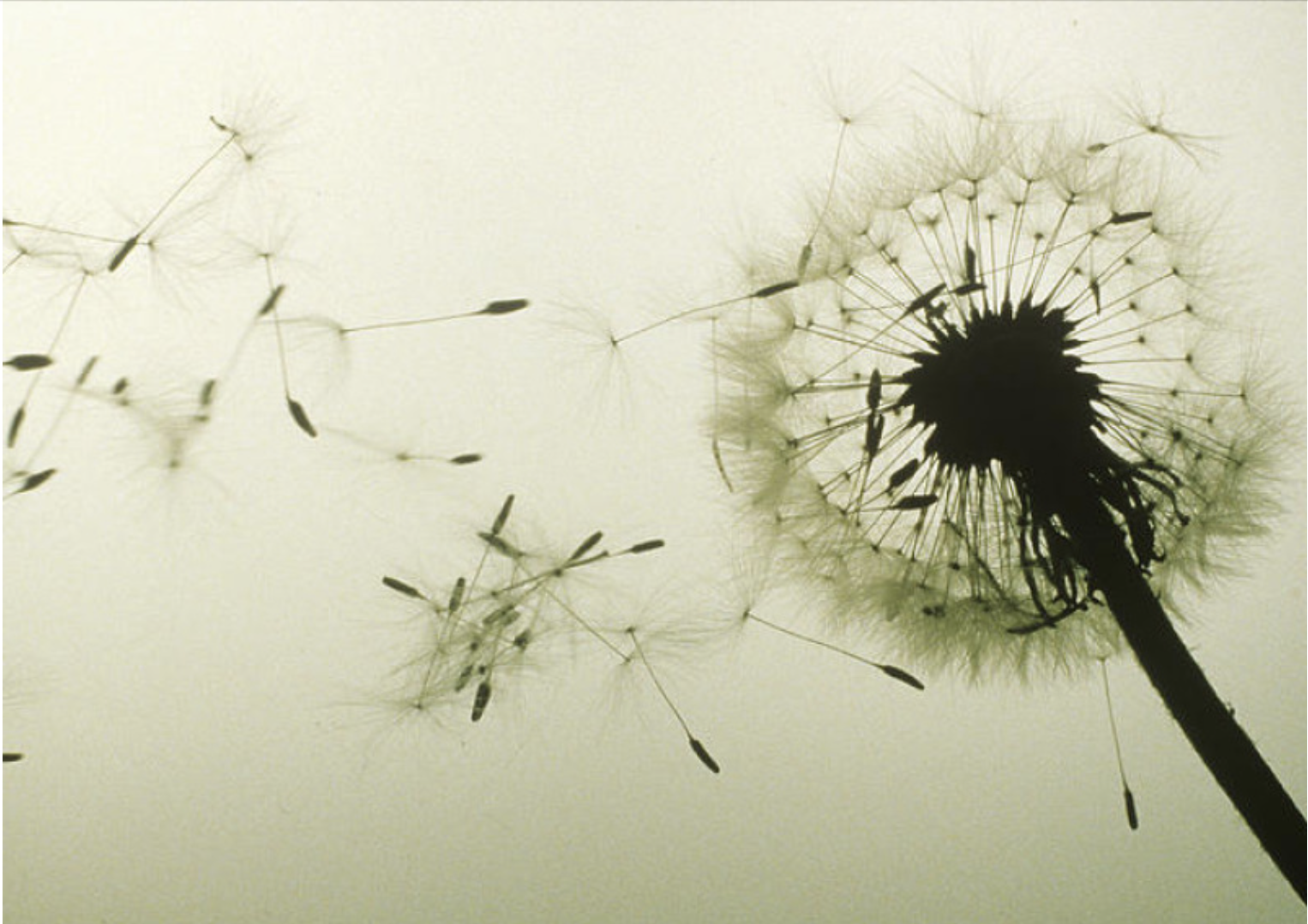
Letting go is like blowing
a dandelion into the wind,
a contrary wind,
that whisks tiny tailed wisps
up your nostrils
under your eyelids
and into your ears.

Letting go is artless wretchedness.
There’s no beauty in it:
It is a roll in the mud and
a stumble through the briars.
But when you emerge,
your dented grace
and seedling peace
will be enough.
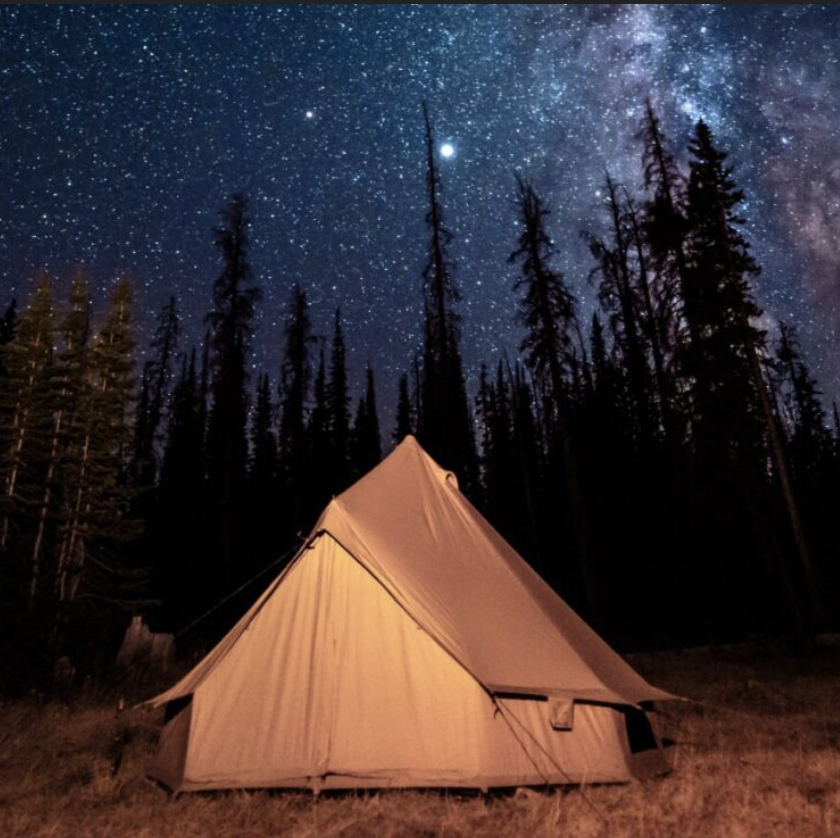
I’m trying to set up this tent in the dark. Not city dark, Not country dark, Wilderness Dark.
I’m trying to line these wiggling poles up with the tent seams. I’m trying to hold this flashlight between my cheek and shoulder. I’m trying to get this impossible rain tarp in place.
I’m trying to be happy and patient.
I’ve tied my children to trees. They’re calling me to untie them so they can help.
I’m trying to do this myself, and I will.
It’s a good thing I tied them Up Tight so if they fall asleep they Won’t Fall Over.
I’m trying to drive these anchors into rocks, or some close stony relatives and ignore the name Rex just called Syd.
I’m trying to fling our food over this branch, fifteen feet above our heads so the bears don’t eat Kate for breakfast.
I’m trying to set up this camp so I can untie my children and lead them straight to the tent and zip them in.
I’m trying to put the sleeping bags on places without roots or rocks and I’ve done so for everyone but me.
We sleep. They sleep. I try.
I awake. My children are outside, unroped, in the light. Something big is going on. I try to listen. I cannot hear words. Hushed tones of astonishment, admiration. A large splash. Whoops and hollers.
I try to figure out why the ranger didn’t tell me there was a drop
off, 60 feet, into the lake on the border of my campsite.
I try to figure out how I set up the tent five feet from the edge and didn’t fall in.
I try not to think of how I tied my three children to trees On the edge